The unique advantages of plastic balls
author: Sean
2025-05-15
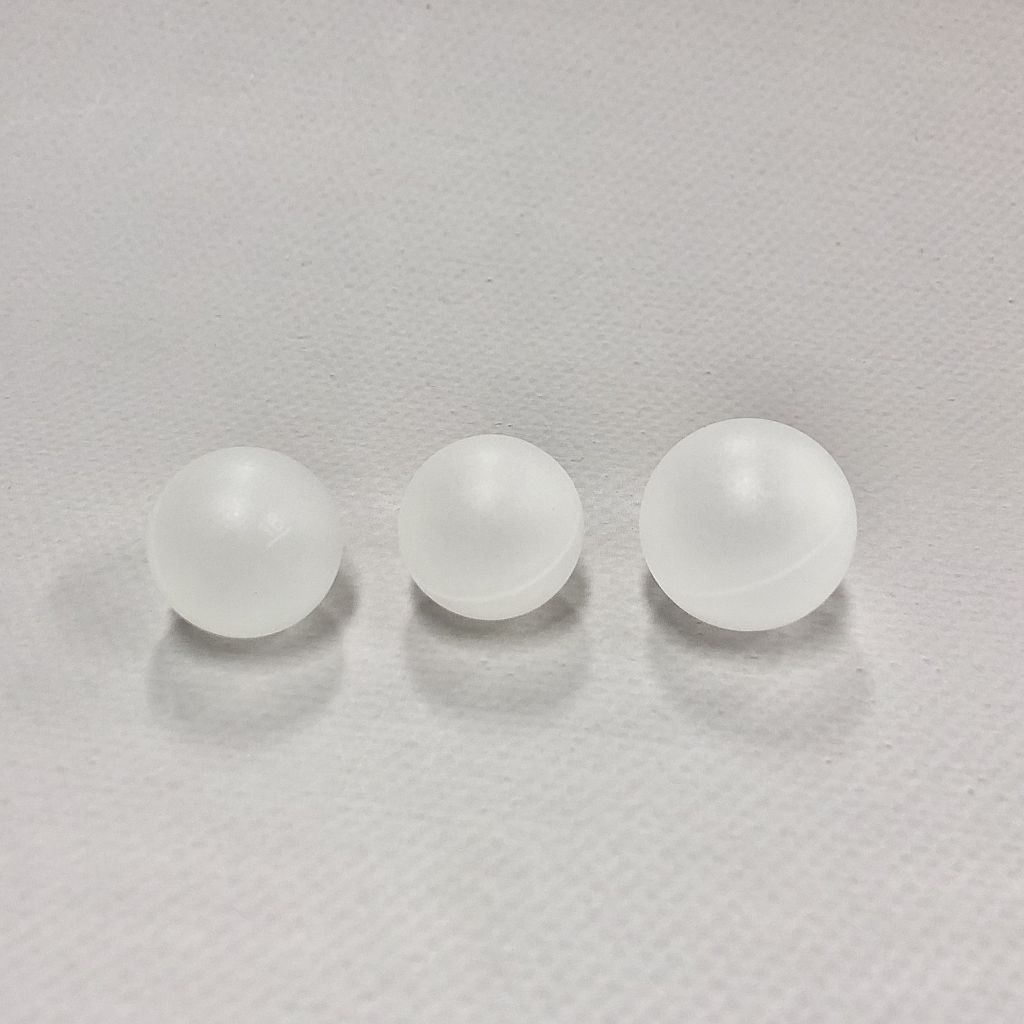
The unique advantages of plastic balls
Due to their material and manufacturing characteristics, plastic balls demonstrate significant advantages in the following scenarios:
Corrosion-resistant and suitable for harsh environments
Suitable for scenarios such as chemical processing, water treatment, and film manufacturing where exposure to corrosive media or high humidity environments is required for a long time. Its high molecular material properties can prevent the oxidation or rusting of metal balls.
In submerged environments such as swimming pool equipment and marine aquaculture tools, its corrosion resistance is superior to that of metal materials.
Medical and disposable products
For one-time medical devices (such as blood separators), no lubrication is required and they can be gamma-ray sterilized, meeting the requirements of aseptic operation.
Reduces the risk of cross-infection and complies with the high hygiene standards of medical devices.
Lightweight and integrated design
The weight is only 1/7 - 1/8 of that of metal balls, making it suitable for fields such as automotive steering systems where component weight reduction is required. At the same time, it can integrate components like gears and housings to simplify the structure.
In drones and portable devices, lightweight design improves energy efficiency.
Food and hygiene-related industries
The plastic surface is smooth and easy to clean, meeting the hygiene requirements for food processing machinery and pharmaceutical packaging equipment.
It avoids the contamination risks that may be introduced by metal materials and is suitable for dairy products and beverage production lines.
Environmentally friendly and cost-effective
No need for lubricating grease, reduced maintenance frequency and pollutant emissions, in line with environmental protection concepts.
The production cost is lower than that of metal balls, and it is recyclable, suitable for one-time packaging or short-cycle equipment.
Electrical insulation and silent operation scenarios
The insulating property of polymer materials makes them suitable for fields such as electronic devices and power meters that require anti-static or insulation protection.
During operation, the noise is lower than that of metal balls, making them suitable for quiet environments such as laboratory instruments and household appliances.
Plastic balls expand the application range through modification with polymer materials (such as adding fiber reinforcement), gradually becoming the preferred solution in scenarios where traditional metal balls are difficult to adapt to.
Due to their material and manufacturing characteristics, plastic balls demonstrate significant advantages in the following scenarios:
Corrosion-resistant and suitable for harsh environments
Suitable for scenarios such as chemical processing, water treatment, and film manufacturing where exposure to corrosive media or high humidity environments is required for a long time. Its high molecular material properties can prevent the oxidation or rusting of metal balls.
In submerged environments such as swimming pool equipment and marine aquaculture tools, its corrosion resistance is superior to that of metal materials.
Medical and disposable products
For one-time medical devices (such as blood separators), no lubrication is required and they can be gamma-ray sterilized, meeting the requirements of aseptic operation.
Reduces the risk of cross-infection and complies with the high hygiene standards of medical devices.
Lightweight and integrated design
The weight is only 1/7 - 1/8 of that of metal balls, making it suitable for fields such as automotive steering systems where component weight reduction is required. At the same time, it can integrate components like gears and housings to simplify the structure.
In drones and portable devices, lightweight design improves energy efficiency.
Food and hygiene-related industries
The plastic surface is smooth and easy to clean, meeting the hygiene requirements for food processing machinery and pharmaceutical packaging equipment.
It avoids the contamination risks that may be introduced by metal materials and is suitable for dairy products and beverage production lines.
Environmentally friendly and cost-effective
No need for lubricating grease, reduced maintenance frequency and pollutant emissions, in line with environmental protection concepts.
The production cost is lower than that of metal balls, and it is recyclable, suitable for one-time packaging or short-cycle equipment.
Electrical insulation and silent operation scenarios
The insulating property of polymer materials makes them suitable for fields such as electronic devices and power meters that require anti-static or insulation protection.
During operation, the noise is lower than that of metal balls, making them suitable for quiet environments such as laboratory instruments and household appliances.
Plastic balls expand the application range through modification with polymer materials (such as adding fiber reinforcement), gradually becoming the preferred solution in scenarios where traditional metal balls are difficult to adapt to.
roll-on bottle
Techniques for Correct Use of Ball-Bearing Bottles