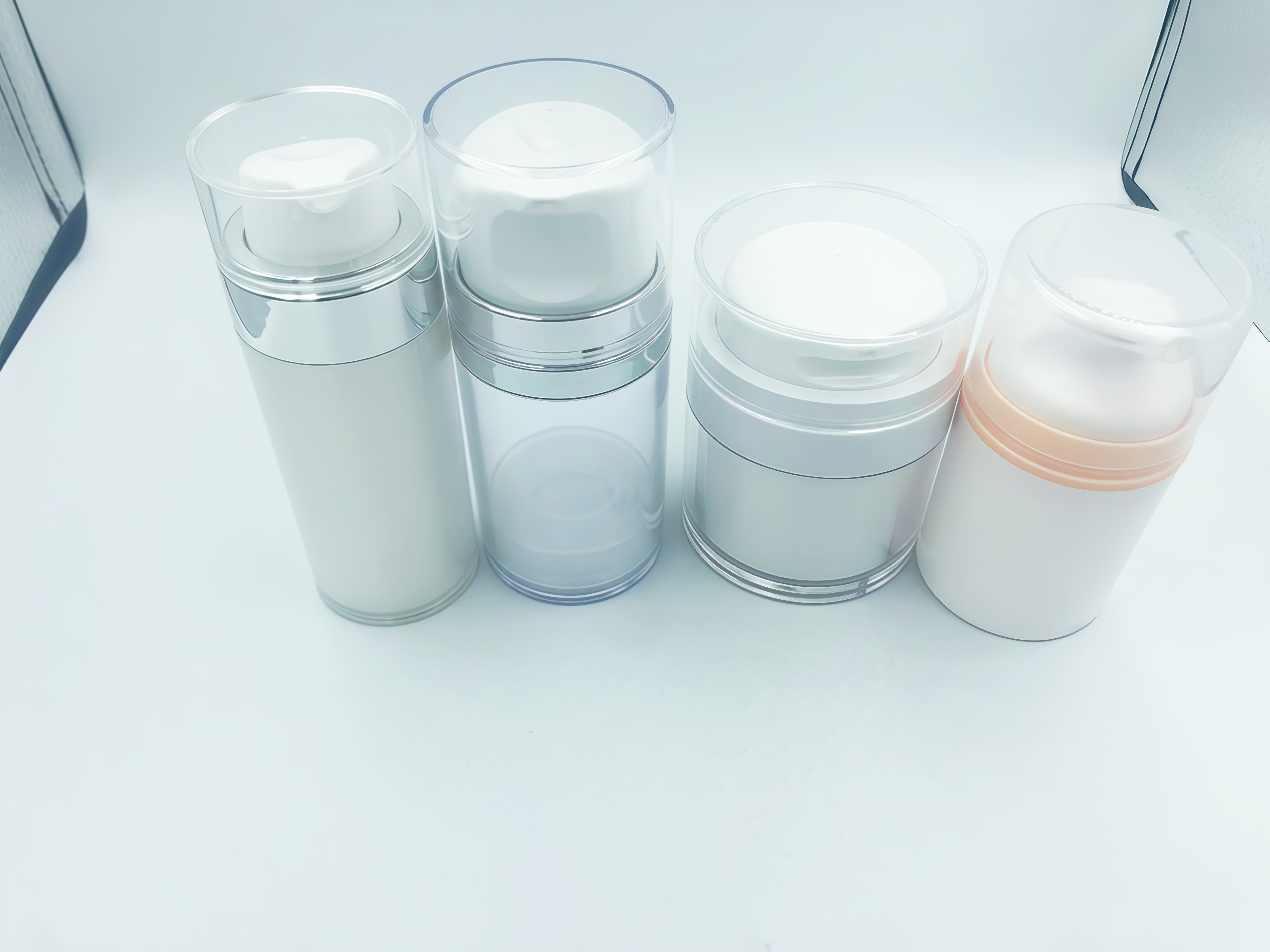
Airless Bottle
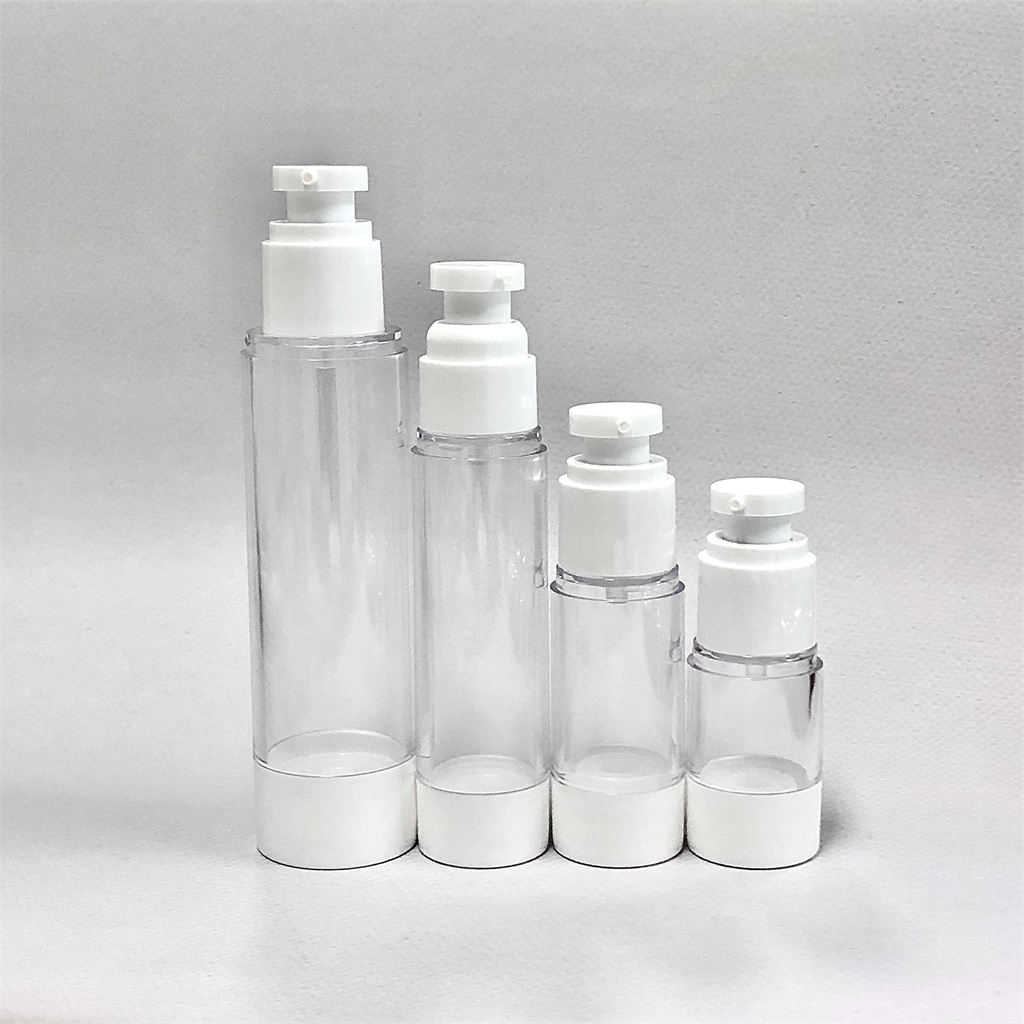
Vacuum Pump System: By utilizing the contractility of the bottom piston and metal spring, a vacuum environment is created when the contents are dispensed, preventing air from flowing back in. Some products further optimize the sealing performance through self-priming pumps or check valve designs.
Materials and Structure: Mostly made of plastic (such as acrylic) or glass, commonly in cylindrical or oval-shaped bottles, and paired with a push-down pump head for one-way dispensing.
2. Product Specifications and Types
Capacity Options: Available in various sizes such as 30mL, 50g, 100g, etc., to meet diverse packaging needs.
Appearance Design: Surface treatments like bright silver and frosted transparent enhance the product's aesthetic appeal and brand recognition.
3. Customization Services
Customization Support: Supports personalized designs for bottle shape, capacity, and printing. Some manufacturers may refund design fees to facilitate orders.
4. Application in cosmetic packaging
I. Core Technologies
- Vacuum Pump System and Quantitative Dispensing: A vacuum environment is created through a bottom piston and one-way valve design, enabling precise dosage control and preventing air backflow that could cause oxidation.
- Tubeless Technology: Non-airtight cavity technology replaces traditional tubes, reducing residue and extending product shelf life.
II. Application Advantages
- Component Stability: Oxygen and contaminants are isolated, making it particularly suitable for skin care products containing active ingredients such as amino acids and vitamins, reducing oxidation risks.
- Efficient Utilization: The vacuum design ensures complete dispensing of the contents, minimizing waste; some brands offer refillable core designs to reduce packaging consumption.
- Hygiene Protection: Direct hand contact with the contents is avoided during use, reducing the risk of microbial contamination.
III. Environmental Sustainability
- Circular Design: Reusable bottle structures are provided to reduce plastic waste.
- Material Optimization: Glass is often used for high-value skin care products (such as serums and essential oils), with capacities typically less than 200ml; plastic bottles focus on lightweight and portability.
- Categorized Disposal: Post-use packaging can be recycled based on material type (e.g., glass bottles can be reused as decorations), and chemical residues should be disposed of
as hazardous waste.
IV. Product Form Innovation
- Diverse Specifications: Ranging from 30ml to 100g in capacity, meeting both daily use and travel convenience needs.
- Multi-functional Design: Innovative forms such as dual-head packaging (e.g., serum + lotion combinations) and built-in applicators enhance user convenience.
V. Industry Trends
- Brand Recognition: Consumers' awareness of the preservative effect of vacuum packaging has increased, making it a mainstream choice for high-end cosmetics.
- Technological Iteration: The application of new technologies such as self-priming pumps and smart pump heads further optimizes sealing and user experience.
vacuum bottle
A delicate and eco-friendly double-cavity essence liquid lotion airless bottles